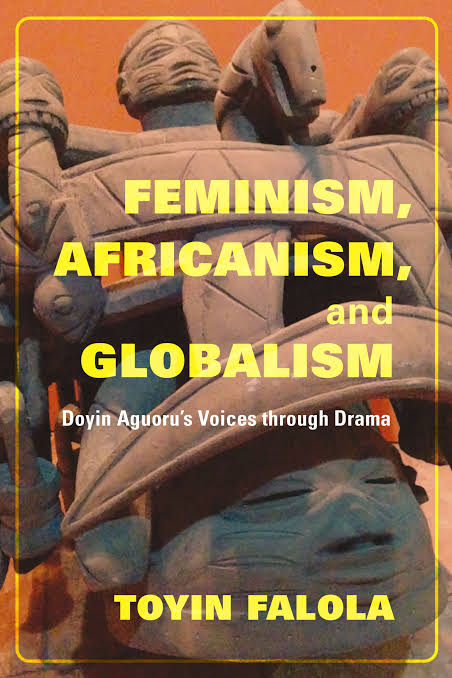
Feminism, Africanism, and Globalism: Doyin Aguoru’s Voices through Drama (Carolina Academic Press, 2026) is a critical study of the Nigerian playwright Professor Doyin Aguoru, a Research Associate at ADRRC. Written by Professor Toyin Falola, an African historian of culture, gender, and emergent globalised world, the 360-page book examines Aguoru's scholarship characterised by the exploration of contemporary Africa through the lens of women's experiences, challenging existential abuses and redefining womanhood. Her plays unravel women's courageous efforts to rewrite their histories and establish themselves in male-dominated arenas. They also are instructive in presenting a balanced view of modern Africa in “glocal and globalised” contexts.

Professor Toyin Falola
With twelve substantive chapters, the book's analysis delves into the consequences of globalisation as dramatised in Aguoru's plays, demonstrating a comprehensive engagement with her oeuvre. Further, the narratives examined in the book highlight the personal sacrifices and resilience required to dismantle hegemonic narratives and oppressive policies against women, often in the face of significant hostility.
The book is organised in three interconnected movements. According to website of Toyin Falola’s Network,
the first four chapters establish the cultural and intellectual terrain: an introductory chapter on narrative and narrators, a chapter situating Aguoru within a broader lineage of African women intellectuals, a chapter on the costs of globalisation for developing countries, and an opening reading of the play, Stolen Seeds. The middle chapters (five through eight) turn to the consequences of globalisation as dramatised across all Aguoru’s published plays, while chapters nine and ten shift toward the ideological and philosophical questions — feminism, economics, genocide — underlying Aguoru’s work. A final chapter draws in the South African playwright Athol Fugard as a comparative reference point, before a concluding chapter synthesises the whole through the idea of “glocalization.”
Furthermore, through her plays, dramas and analysed in this book, Aguoru's works reflect an understanding of African performance culture, where storytelling is a collective activity involving songs, dances, and rituals. This imbues her drama with particular significance. Her themes, addressing violence against women, societal inequality, cultural domination, and human dignity, resonate globally, underscoring why her works deserve wider recognition. Her scholarship represents a conscious effort to counteract historical exclusion within African intellectual culture, positioning her and her works within vital discourses on African literature, feminism, and performance studies.
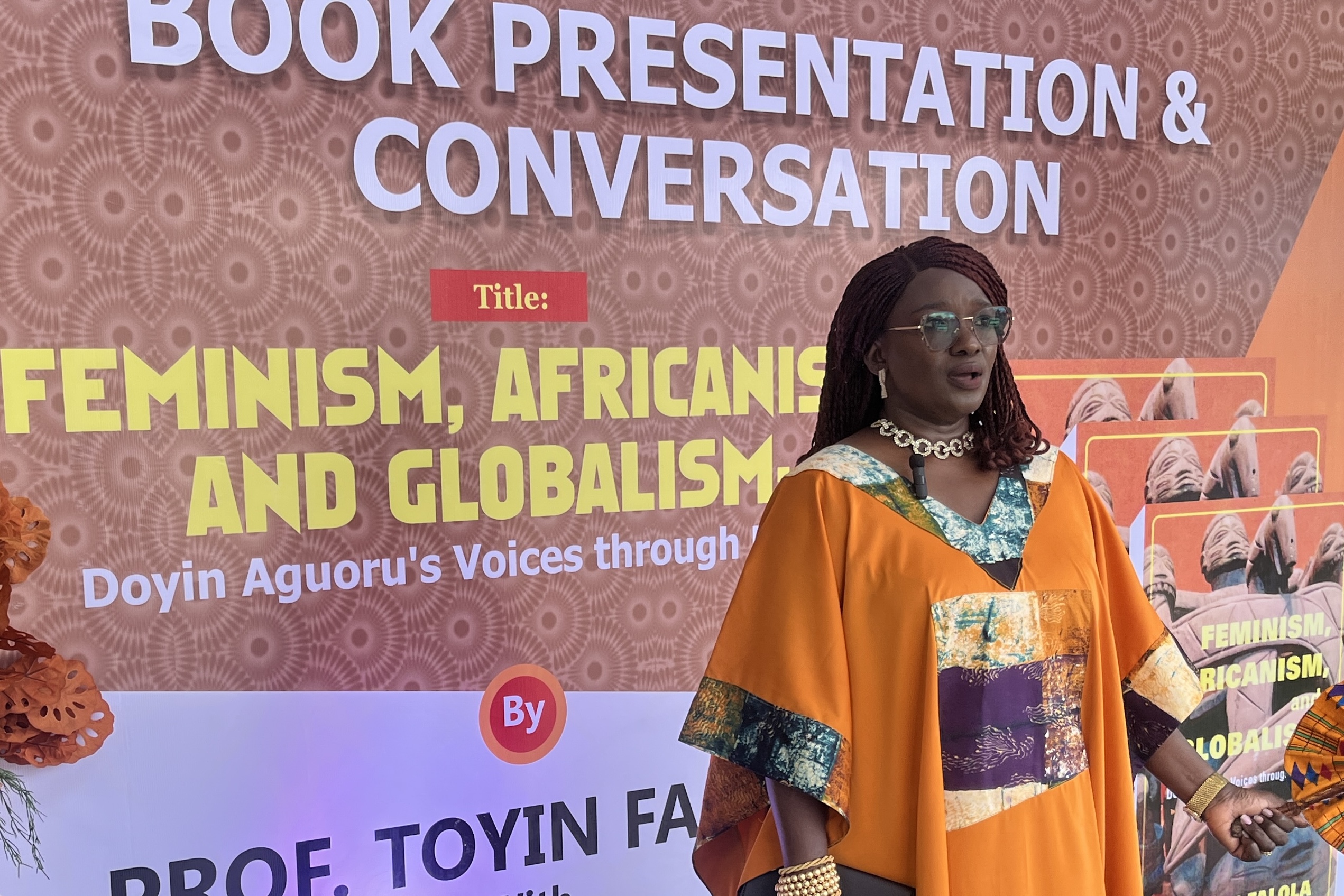
Professor Doyin Aguoru
Professor Aguoru's academic standing as a Professor of Transnational and Transcontinental Studies, Research Associate at the African Diaspora Resource and Research Centre (ADRRC) and former Director of the Centre for Excellence in Teaching and Learning at the University of Ibadan underscores her multifaceted expertise. Her work such as "Refugees of the Great Lakes" and "She," connects theory, practice, scholarship, and craft to international politics and transnational influence, as evidenced by her engagement with Japanese Studies and her laureate awards from institutions like the CODESRIA Gender Institute, which bridge Africa, the United States, and Japan.
For the ADRRC, Professor Aguoru's scholarship is highly relevant. Her work challenges patriarchal structures, amplifying marginalised voices, and examining the complexities of gender within Africa and her diaspora showcases her scholarship within the ADRRC's mission to foster research and disseminate knowledge on the African diaspora. Her plays serve as invaluable resources for understanding the socio-political and cultural dynamics pertinent to the diaspora's heritage and contemporary realities.