The theory of extalgia shines at Oxford
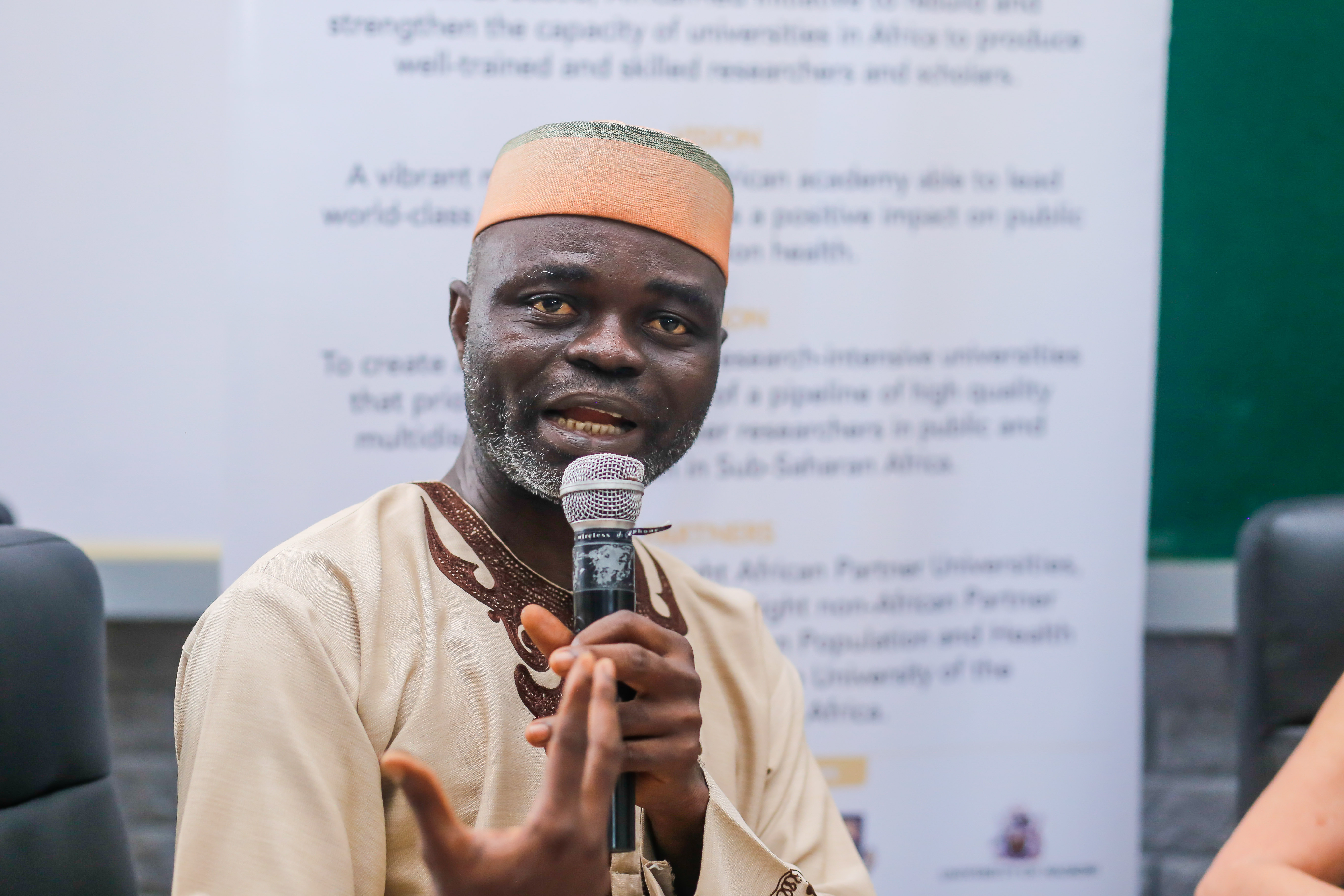
Professor Senayon Olaoluwa, Director of the ADRRC, gives an account of his experience at the AfOx Fellowship presentation in June 2026 where he shared his thinking around extalgia, an emergent theory in migration studies which conceptualises the physiological and psycho-social wellbeing of left-behind relatives. In this piece, Professor Senayon describes his presentation, his award as the best presentation in the fellow category, and shares insight into his upcoming book.
------------------------------------------------------------------------------------------------------------------------------
Recently, I participated in the10-Year Anniversary of the prestigious Africa Oxford Initiative, otherwise known as AfOx Fellowship at the University of Oxford. During the conference/anniversary, I had the opportunity of presenting a poster on “Extalgia: A trajectory of Homeland Trauma and Creative Transcendence in the Context of Migration.” The exhibition presented an opportunity to curate extalgia as an emergent theory of migration that is attentive to the trauma of the left-behind, and it received incredible reception. It discussed the creative responses of stayers and the limits of their transcendence, which underscores the imperative of institutional frameworks and systems of support for the left-behind in the context of migration.
But mine was actually a two-level participation, as I was also selected to make an oral presentation on a chapter in my ongoing book on Extalgia. Entitled ‘“How much? How much for your wife, Ngozi”: Feminist Extalgia and Lone Motherhood in Gone,’ the presentation, which was made on Tuesday the 9th of June 2026 to three different sets of audience as a marathon, became the icing on the cake, as it was voted and ranked the Best in the “Fellows Category.” The recognition gave me a platform to represent before a larger audience on Wednesday to an even much louder ovation.
Besides the award for the performance, looking back, it’s the opportunity to share at such a prestigious forum and ambience a new strand of the concept.
Feminist extalgia describes the peculiar ways in which left behind women, especially lone mothers, are affected by the migration of spouses. While it takes a cue from the iconic notion of “feminist economics,” the generative trauma in feminist extalgia is made poignant by the challenge of having to raise children alone. This much is demonstrated in the case of Ngozi in the Nollywood film, Gone, as directed by Daniel Ademinokan. While human hostility is apparent, the chapter is equally attentive to the non-human adversity and ignominy to which left-behind lone mothers are subjected by spatiotemporal circumstances. In more specific terms, Lagos embodies an engulfing space with which Ngozi has to contend because “Eko ni won n pe bi!” (This place is called Lagos!). The personified rendition of Lagos as evocative of toxic masculinity colludes with the corrosive impact of temporal passage in the traumatic resonance of what 25 years can do to a left-behind wife and mother of two. The ignominy of being left behind faced by Ngozi spreads to the children in their growth process. AyoChukwu’s bio-polarity and street thuggery reflect the biotechnological violence of nominal grafting. Her sister, Aanu, yields covertly to the allure of commercial strip dance, underscoring the limits of transcendence for the left-behind. When Ani, the husband, shows up from New York after 25 years, not only has his mother died; his wife, Ngozi, has found a lover in Mr. Philip. Yet, while Ani manages to win his wife back, Ngozi’s extalgic tragedy is apparent in the knowledge that Philip only sees her a commodity to be bought, which informs his question to Ani towards the end of the film: “How much? How much for your wife, Ngozi?”
In the end, Ngozi’s extalgic vulnerabilities together with those of her children pinpoint the thrust of extalgia: the imperative of consciously instituting structures of care for the left-behind in the observance of a new ethos of migration equity.